Quick answer: chimney leaks usually come from the junction between the stack and the roof, not from the middle of the roof slope. Failed flashing, cracked mortar, loose flaunching, porous brickwork and blocked back gutters can all let water track down beside the chimney.
- Water staining beside a chimney breast is a strong clue, but the visible stain is not always directly below the entry point.
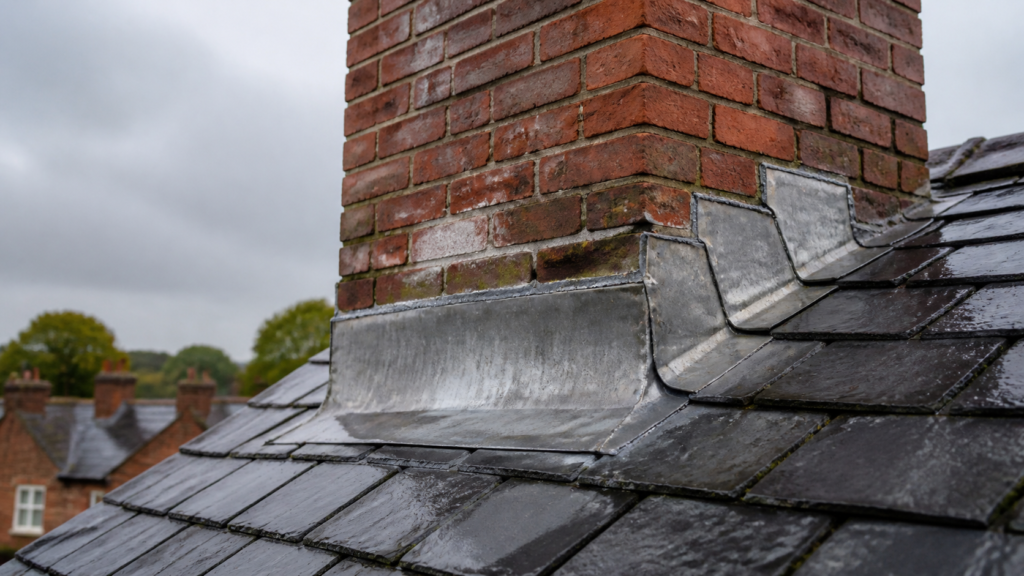
- Lead flashing should be checked as a system: front apron, side soakers or step flashing, back gutter, pointing and upstands.
- Repointing alone will not fix a leak if the flashing, flaunching or roof covering around the stack has failed.
Why chimney stacks are a common leak point
A chimney breaks through the roof covering, so it needs several separate weathering details to keep rain out. The brickwork, the mortar joints, the flaunching around the pots, the lead flashing and the surrounding tiles or slates all have to work together. If one part fails, water can find a route into the roof space.
This is common on older Kent properties, especially terraced and semi-detached homes where chimney stacks sit on party walls. The stack can look sound from the ground while the hidden back gutter or side flashing is already letting water through.
Flashing, pointing or flaunching: what is actually failing?
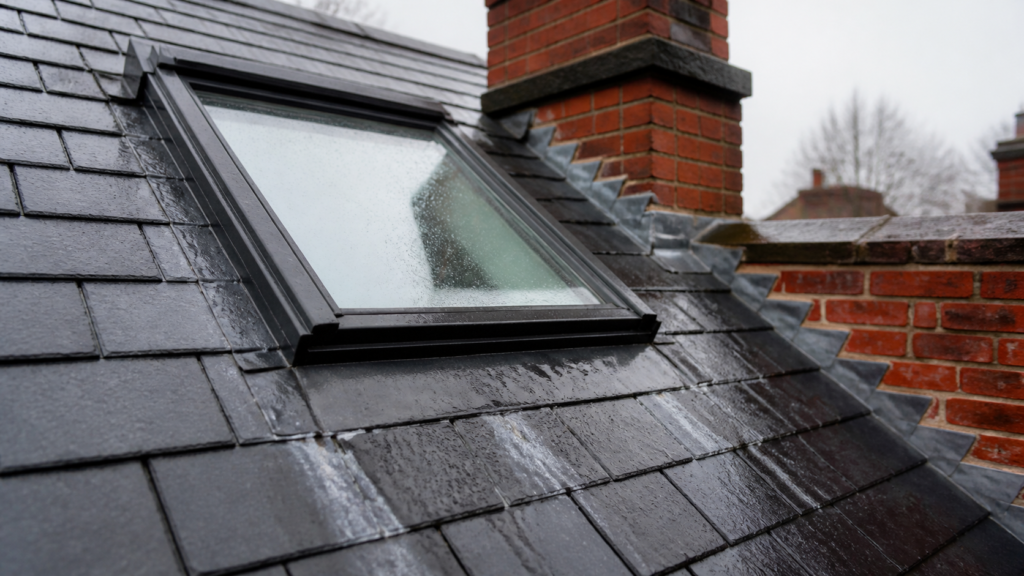
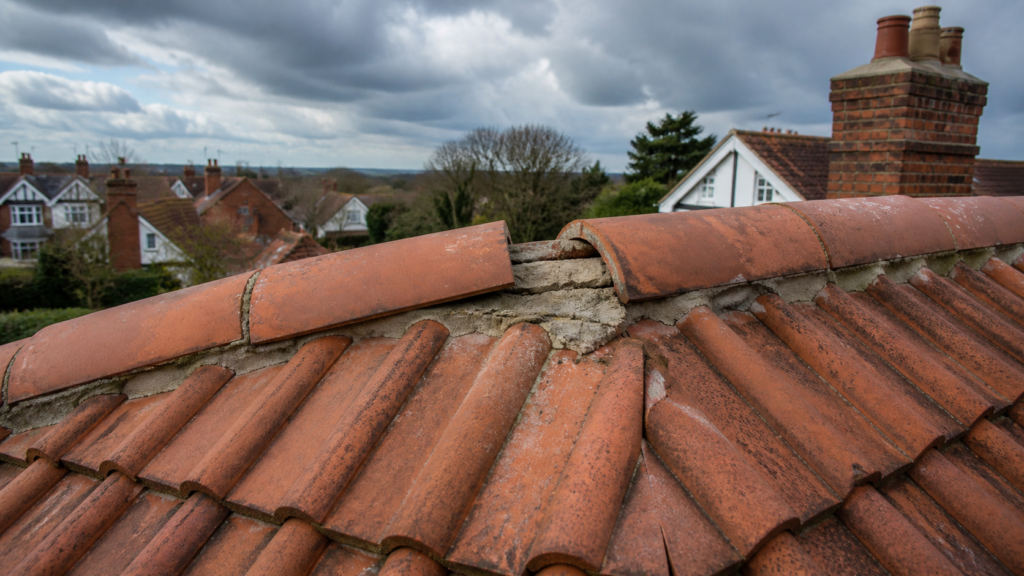
Lead flashing seals the joint between the chimney and the roof covering. Pointing is the mortar between the bricks and around the flashing chase. Flaunching is the mortar bed at the top of the stack that throws water away from the chimney pots. These are different details, and each can fail in a different way.
If the lead has lifted, split or pulled out of the chase, you may need leadwork and roof flashing. If the mortar joints are open or powdery, repointing may be needed. If the top of the stack is cracked, water can enter from above even when the roof flashing looks acceptable.
Signs your chimney is letting water in
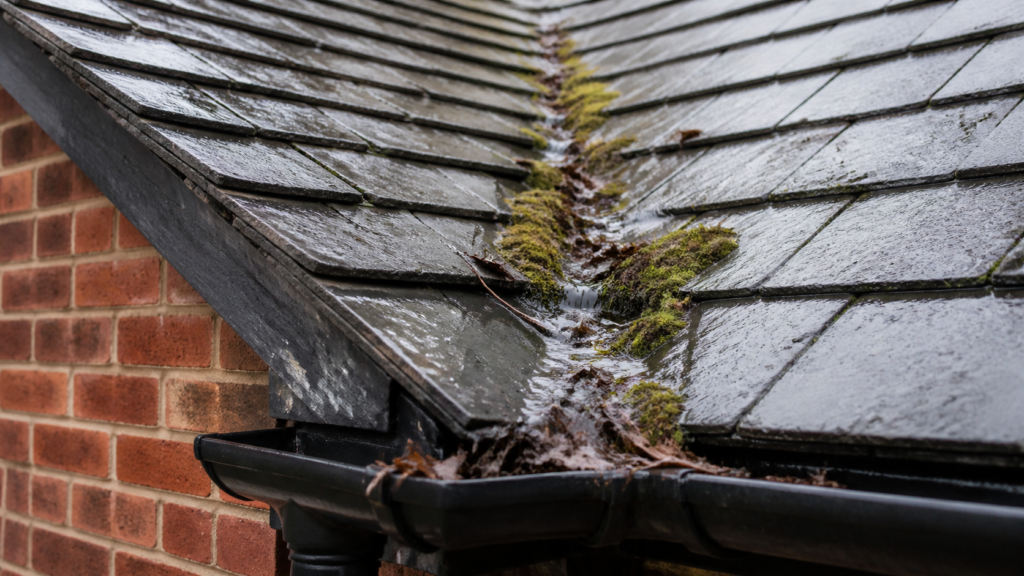
Inside the house, look for staining around the chimney breast, damp patches near the ceiling line, peeling paint, musty smells in an unused fireplace or water marks in the loft near the stack. Outside, warning signs include cracked pointing, vegetation on the stack, slipped tiles close to the chimney, lead that has lifted, or mortar that has fallen into the gutter.
Not every damp chimney breast is a roof leak. Condensation, unused flues and internal plaster contamination can also play a part. That is why a proper roof inspection should look at the stack from above and inside the loft before recommending work.
What a chimney repair should include
A chimney repair should start with the whole stack and roof junction. The roofer should inspect the front apron, step flashing or soakers, back gutter, pointing, flaunching, pots, cowls and the roof covering immediately around the stack. Repairing only the most visible crack can leave the real leak untouched.
Depending on the fault, the work may involve repointing the stack, renewing lead flashing, rebuilding loose brickwork, repairing flaunching, replacing damaged tiles or clearing a blocked back gutter. For wider roofline issues, the chimney repairs and repointing service is the natural starting point.
When chimney leaks become urgent
A small stain can become urgent if water is reaching electrics, saturating insulation, dripping into a room or following a period of storm damage. If the leak started after high winds, also check for moved ridge tiles, slipped slates and damaged flashing nearby. Our guide on what to do first after storm damage to a roof in Kent covers the immediate safety steps.
If the leak is not active but the stack is visibly deteriorating, book maintenance before winter. A planned repair is usually cleaner and easier than an emergency callout after water has reached ceilings and plaster.
FAQs about chimney flashing and repointing
Can chimney flashing leak even if the lead looks fine from the ground?
Yes. The hidden back gutter, side flashing or chase can fail where it cannot be seen from ground level. A roof-level inspection is usually needed.
Will repointing stop a chimney leak?
Only if failed pointing is the cause. Repointing will not solve a leak caused by split lead, failed flaunching, damaged tiles or a blocked back gutter.
Why does my chimney only leak in heavy rain?
Heavy or wind-driven rain can overwhelm a weak flashing detail or force water into cracks that stay dry in lighter rain. That pattern often points to a roof junction or stack issue.
Should unused chimneys still be maintained?
Yes. An unused chimney still passes through the roof and still needs sound brickwork, flashing and flaunching to keep water out of the property.
Kent Roofing Services can inspect chimney leaks across Kent and advise whether the fix is flashing, repointing, flaunching, tile work or a wider roof repair. Contact us to arrange an inspection.