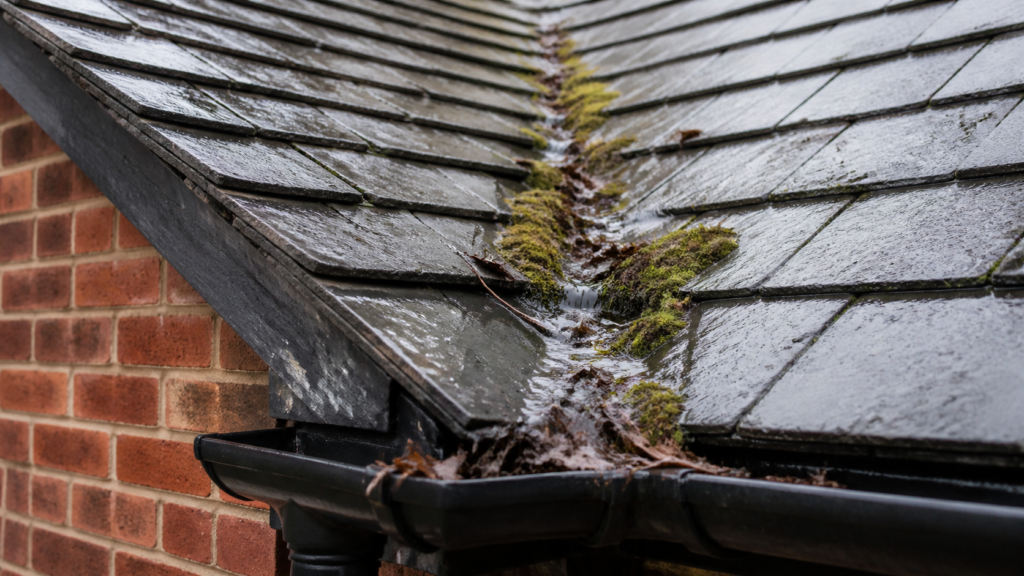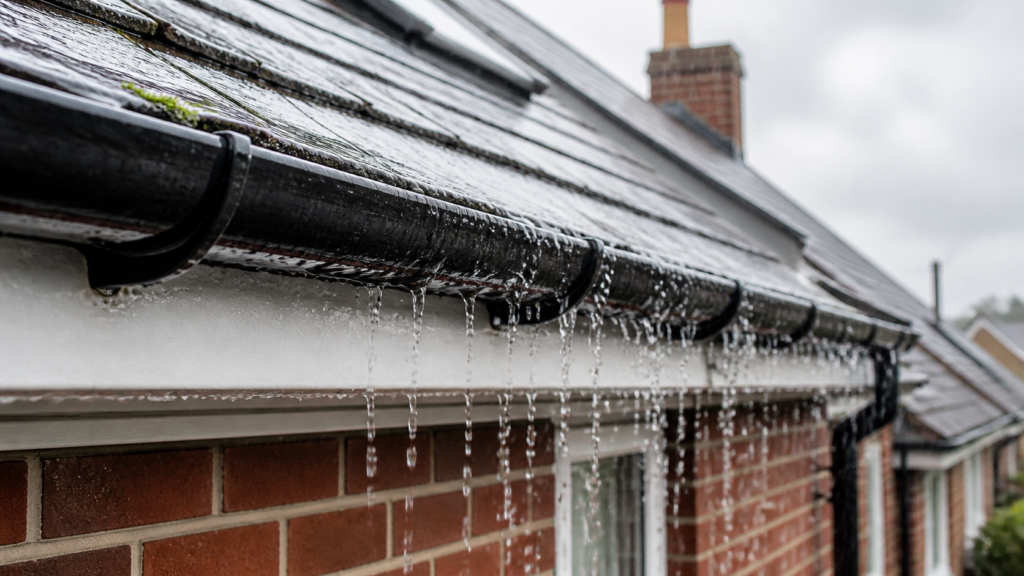
Quick answer: gutters overflow in heavy rain when water cannot leave the roofline fast enough. The cause may be blocked leaves, moss, poor falls, a sagging run, undersized outlets, or a roof problem that is sending more water into one section than the gutter can handle.
- Check for staining on fascia boards, green algae below the gutter, damp brickwork and water marks inside rooms near the eaves.
- Do not ignore overflow just because it only happens in heavy rain. Repeated spill-over can soak timber, soffits and masonry.
- A proper inspection should check the roof edge, gutter fall, brackets, outlets, downpipes and any valley feeding into the gutter.
Why overflowing gutters matter
A gutter is not just a neat finishing detail. It is the drainage channel that moves roof water away from the building. When it overflows, water can run behind the gutter, soak the fascia, enter the soffit, stain brickwork and overload the ground below the downpipe.
On Kent homes with trees nearby, moss and leaf fall are common causes. On older rooflines, the gutter may also have dropped between brackets, leaving a low point where water sits. If a roof valley discharges into a short gutter run, the outlet may be overwhelmed during hard rain.
How to tell whether it is a cleaning issue or a repair issue
If the gutter is visibly packed with moss, leaves or grit, cleaning is the first step. If the gutter is clean but still overflows, the problem is more likely to be poor fall, a blocked downpipe, a damaged joint or a roof detail sending water into the wrong place.
Look along the gutter from ground level. A bowed or dipping run can hold water even after rain stops. A leak at one joint points to a local repair, while overflow along a whole elevation usually means the fall, outlet or downpipe route needs checking. Our guttering, fascias and soffits service covers this roofline work.
The roof faults that make gutters overflow
Overflow can start higher up the roof. A blocked roof valley, slipped tile, damaged undercloak or poor flashing detail can concentrate water in one place. That is why a gutter problem should not always be treated as a gutter-only job.
If overflow appears below a valley, chimney or dormer, ask for the surrounding roof to be inspected. Fixing the gutter without finding the source can leave the same water problem returning after the next heavy shower.
When gutter overflow becomes urgent
Call for help quickly if water is entering a room, running into an electrical area, soaking timber fascias, or pouring onto a flat roof below. Overflow above a bay window, porch or extension can also create hidden damage because the water has a second roof surface to attack.
For active leaks, start with emergency roof and leak repairs. For planned prevention, combine gutter clearance with roof maintenance so valleys, eaves and roof edges are checked together.
FAQs about overflowing gutters
Why do my gutters overflow only in heavy rain?
Heavy rain exposes weak drainage. The gutter may be partly blocked, badly sloped, undersized at the outlet, or fed by a valley that sends too much water into one short run.
Can overflowing gutters damage a roof?
Yes. Overflow can soak fascia boards, soffits and roof-edge timbers. It can also push water into walls and ceilings if the roofline is already weak.
Should I clean gutters myself?
Ground-level inspection is sensible, but roofline work at height should be handled safely. If the gutter sits above a conservatory, extension or uneven ground, use a roofer or gutter specialist.
Do overflowing gutters mean I need new fascias?
Not always. If the timber or uPVC is sound, the repair may be cleaning, realigning or replacing gutter sections. New fascias are more likely when repeated overflow has caused rot or distortion.
Kent Roofing Services can inspect overflowing gutters, roof valleys and roofline damage across Kent. Contact us to arrange a visit.