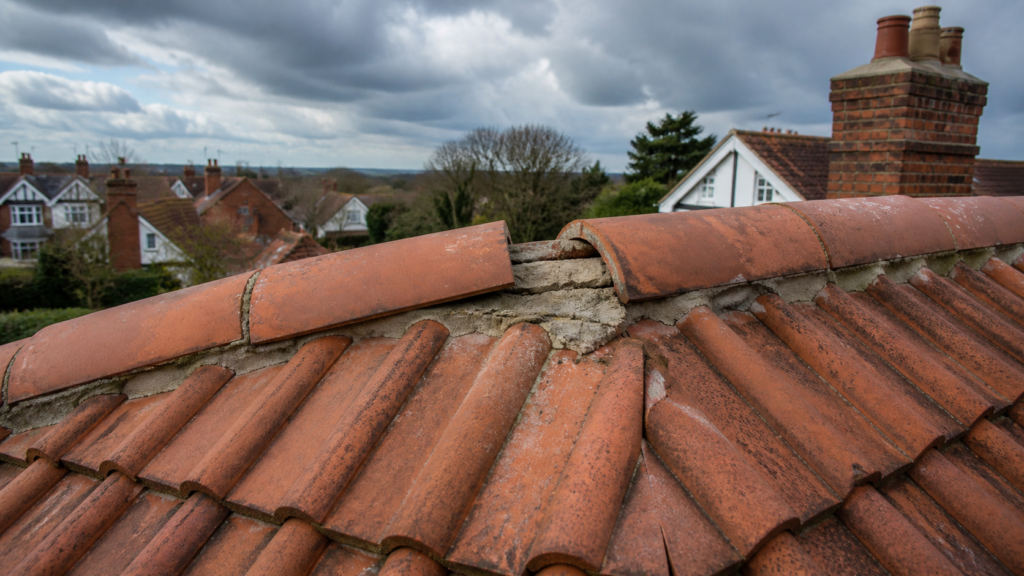
Quick answer: loose ridge tiles should be checked quickly after high winds because they protect the highest joint of the roof. Once a ridge tile lifts, cracks or loses bedding, wind-driven rain can reach the roof structure below.
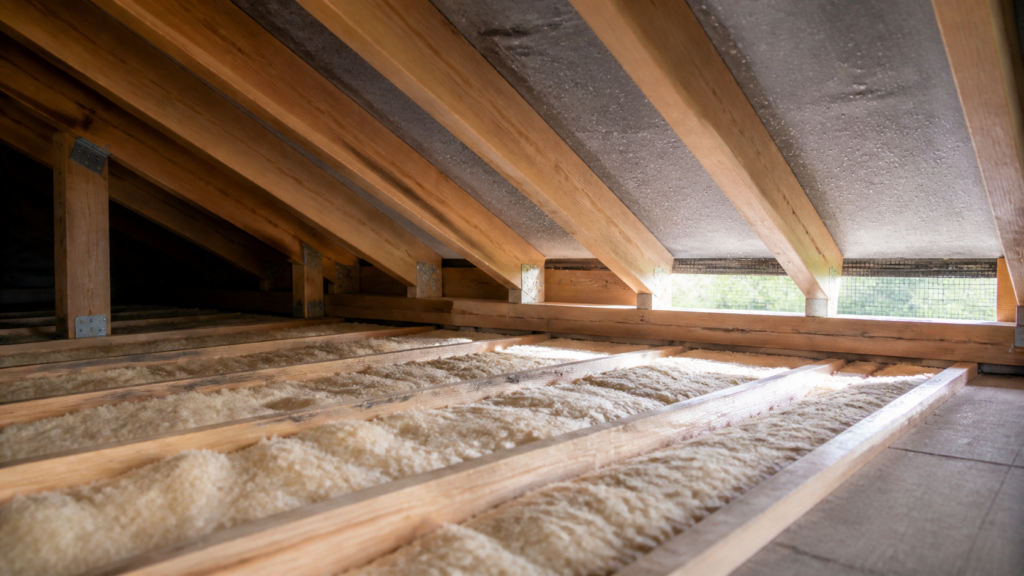
- Look for missing mortar, uneven ridge lines, pieces of bedding on the ground and daylight visible from the loft near the ridge.
- Do not climb onto the roof to push a ridge tile back. A loose tile can move suddenly and the ridge is one of the most exposed parts of the roof.
- High winds can loosen ridge tiles even when the rest of the roof looks intact from the street.
Why ridge tiles fail in windy weather
Ridge tiles sit along the top of a pitched roof where two roof slopes meet. They are exposed to wind from both sides, so old mortar, poor bedding or tired fixings can fail during storms. Once movement starts, the gap usually gets worse with each freeze, rain cycle and gust of wind.
Older mortared ridges are especially vulnerable when the bedding has cracked or separated from the tile. Dry ridge systems can also fail if clips, unions or end caps are damaged or badly installed.
Signs a ridge repair is needed
From ground level, look for a ridge tile that sits higher, lower or more crooked than the others. Missing mortar at the edges, loose fragments in the gutter, damp patches high on the loft lining or staining along the ceiling near the roof apex are all warning signs.
If the issue appeared after severe weather, it should be treated as storm-related roof damage. Our storm damage guide explains the first safety steps before inspection and repair.
Repair, re-bed or dry ridge system?
A small local repair may be enough when one ridge tile has moved and the surrounding ridge is sound. If the bedding is failing along the run, re-bedding several tiles may be more sensible than patching one visible gap.
On some roofs, a dry ridge system is worth considering during wider roof work because it mechanically fixes the ridge and supports ventilation. That choice depends on the roof condition, existing tiles and whether the surrounding covering is also due for repair. The wider decision sits close to pitched roofing and roof repairs.
When it becomes urgent
A loose ridge tile is urgent if it could fall, if water is already entering, or if more high winds are forecast. It is also urgent when the roof sits above a public path, driveway or neighbouring property. A moving ridge tile is both a water-entry risk and a falling-object risk.
If rain is already coming in, use emergency roof and leak repairs. If the tile is loose but not leaking, book a planned inspection before the next storm cycle.
FAQs about loose ridge tiles
Can one loose ridge tile cause a leak?
Yes. The ridge covers the top joint of the roof. A small opening can allow wind-driven rain into the roof structure.
Can ridge tiles be repaired without replacing the roof?
Often, yes. Local re-bedding or replacement may be enough if the surrounding roof covering is sound.
Are dry ridge systems better than mortar?
Dry ridge systems mechanically fix the ridge and can support ventilation, but they must be fitted correctly and matched to the roof. They are not a shortcut for a failing roof covering.
Should I claim storm damage on insurance?
That depends on your policy, evidence and the weather event. Photograph visible damage safely from the ground and keep inspection notes if you may need to make a claim.
Kent Roofing Services can inspect loose ridge tiles, storm damage and pitched roof defects across Kent. Contact us to arrange a roof check.