Moss on a roof is one of the few problems where doing nothing is often the right answer, and where doing the wrong thing does far more damage than the moss ever would. A thin covering of moss on a sound roof is cosmetic. Moss becomes a genuine problem when it is thick enough to hold water against the covering, when it blocks gutters and valleys, or when it is growing on a roof whose surface has already broken down. The distinction is worth understanding before anyone gets a pressure washer near it.
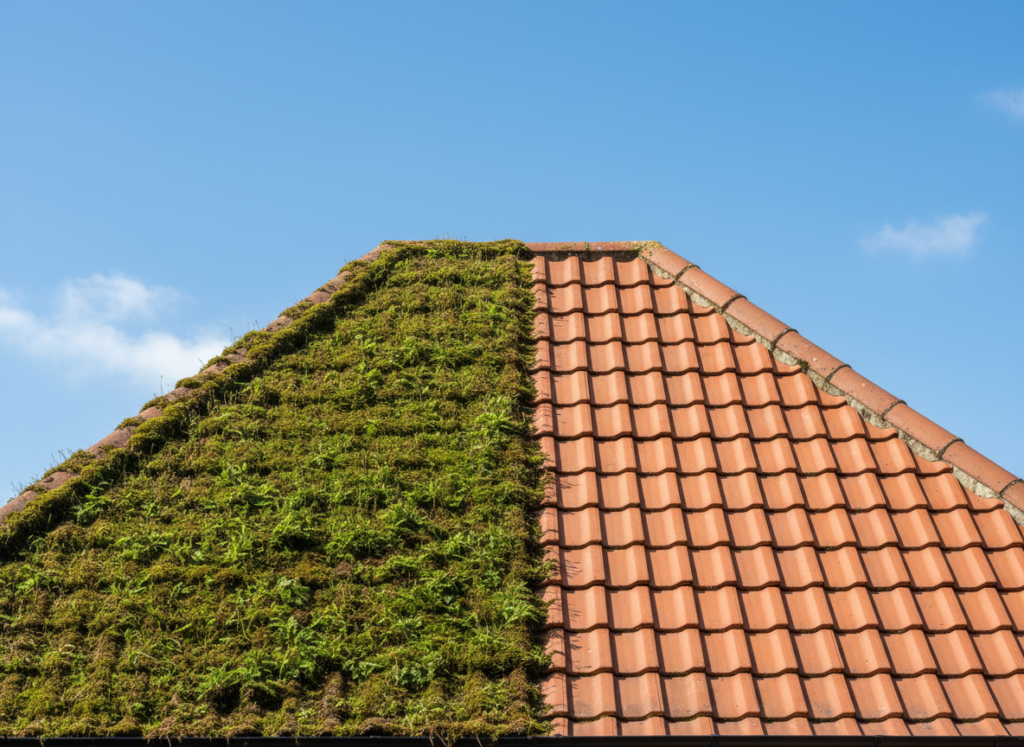
Kent grows moss well. A mild, damp maritime climate, plenty of tree cover through the Weald and the North Downs, and a lot of north-facing slopes that never properly dry out add up to ideal conditions. On many Kent roofs a green north slope and a clean south slope is normal and tells you nothing worrying at all.
Why Kent roofs are so prone to it
Moss needs moisture, shade and a surface it can grip. Kent supplies all three in quantity.
- Humidity. Coastal and estuary air around Whitstable, Herne Bay, Thanet, Sheppey and the Medway towns keeps roof surfaces damp for longer than inland averages suggest.
- Shade. Mature trees are everywhere in the Weald, along the Downs and in the older suburbs of Tunbridge Wells, Sevenoaks and Canterbury. A slope shaded until midday stays wet.
- Surface texture. Concrete tiles, particularly older ones whose factory coating has worn away, are porous and rough, which is exactly what moss spores need. Smooth natural slate is far less hospitable, and tends to attract lichen rather than thick moss.
- Overhanging vegetation. Leaf fall and organic debris feed growth and hold moisture in place.
None of that means the roof is failing. It means the roof is in Kent.
When moss genuinely does not matter
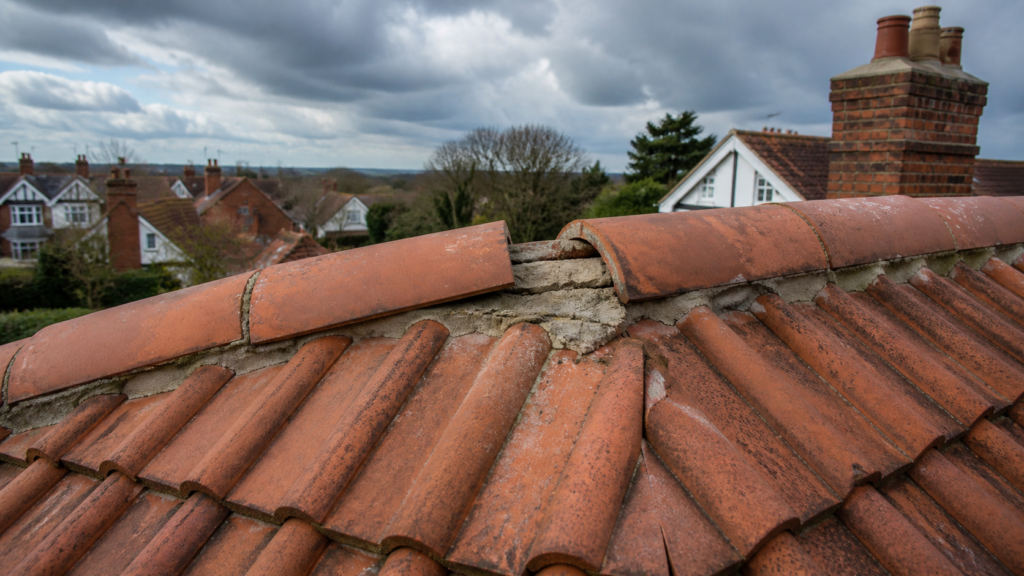
If the covering is sound, the moss is thin, the gutters run freely and there is no history of leaks, moss is an aesthetic issue and nothing more. Removing it will make the roof look better and will not make it last longer. On peg tile and clay pantile roofs in Wealden villages a weathered surface is part of the character, and there is no maintenance argument for scrubbing it off.
The one qualification is that “thin moss on a sound roof” needs to be an assessment, not an assumption. Moss is very good at hiding a cracked tile.
When it does matter
It is holding water against the covering
Thick moss acts as a sponge. On a porous concrete tile that keeps the tile saturated, and a saturated tile in a cold snap is a tile at risk of frost damage as the water in it expands. Over years this contributes to spalling and surface breakdown.
It is blocking the water’s route off the roof
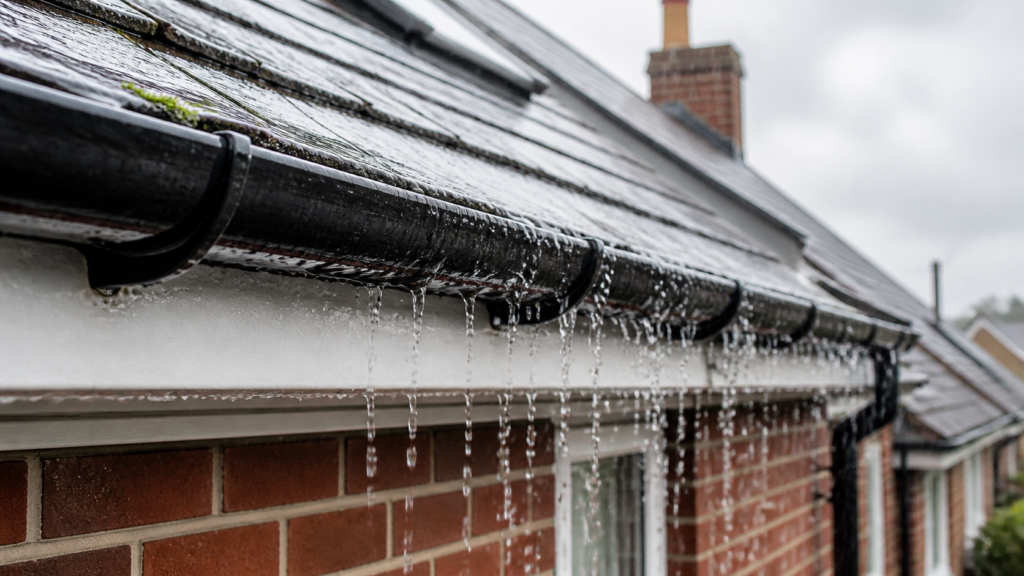
This is the most common real problem. Moss dislodges and travels: into gutters, into valleys, into hopper heads and downpipes. A blocked valley causes water to back up under the tiles, which is a leak with no obvious cause. A blocked gutter sends water down the wall, saturating the brickwork and eventually the fascia and soffit behind it. Far more Kent homes suffer from moss debris in the drainage than from moss on the tiles. Our page on guttering, fascias and soffits covers what happens when that goes unaddressed.
It is lifting or displacing the covering
Heavy growth accumulating at the head of a slate or tile can, over time, force a slight lift in the course above it. On plain tiles and slates in particular this can break the seal that the overlap depends on.
It is growing on a roof that is already breaking down
This is the diagnostic one. Concrete tiles that are heavily mossed on all elevations, including the sunny side, are usually tiles whose surface coating has gone and which are now absorbent throughout. In that case the moss is not the problem, it is the indicator. Cleaning it off will reveal a rough, faded, porous tile that will be green again within two or three years. At that point the useful question is no longer how to clean the roof but whether cleaning it is worth doing at all, which our guide to repairing or replacing a Kent roof deals with directly.
The mistake that does the real damage
High-pressure washing is the single worst thing you can do to a tiled roof. It is worth being blunt about, because it is widely offered and superficially impressive.
On concrete tiles, a pressure lance strips off the remaining surface coating, taking the granular finish with it and exposing the porous concrete beneath. The roof looks transformed for a season and then greens up faster than before, because the surface it now presents is rougher and more absorbent than the one it had. You have accelerated the exact process you were trying to reverse.
The second problem is water direction. A tiled roof is designed to shed water downwards under gravity. A pressure washer drives water sideways and upwards, under the laps and past the head of every tile, straight onto the underlay. On an older roof with perished felt, that water goes into the loft. Plenty of “sudden” leaks appear in the week after a roof clean.
The third is mechanical. Pressure washing dislodges ridge and verge mortar, cracks weathered tiles and washes fixings loose. Do not do it yourself, and be cautious of anyone who leads with it as the method.
How moss should be removed
Where removal is justified, the approach is patient rather than aggressive.
- Manual removal. Scraping and brushing by hand, working from proper access equipment, is slower but does not damage the surface or drive water where it should not go.
- Clearing the drainage first. Gutters, valleys, hoppers and downpipes need clearing as part of the job, not afterwards, because everything removed from the roof ends up there.
- Biocide treatment. A suitable roof-safe biocide applied after clearing kills residual spores and slows regrowth. It works gradually rather than instantly, and the roof continues to clear for weeks or months afterwards, which is normal.
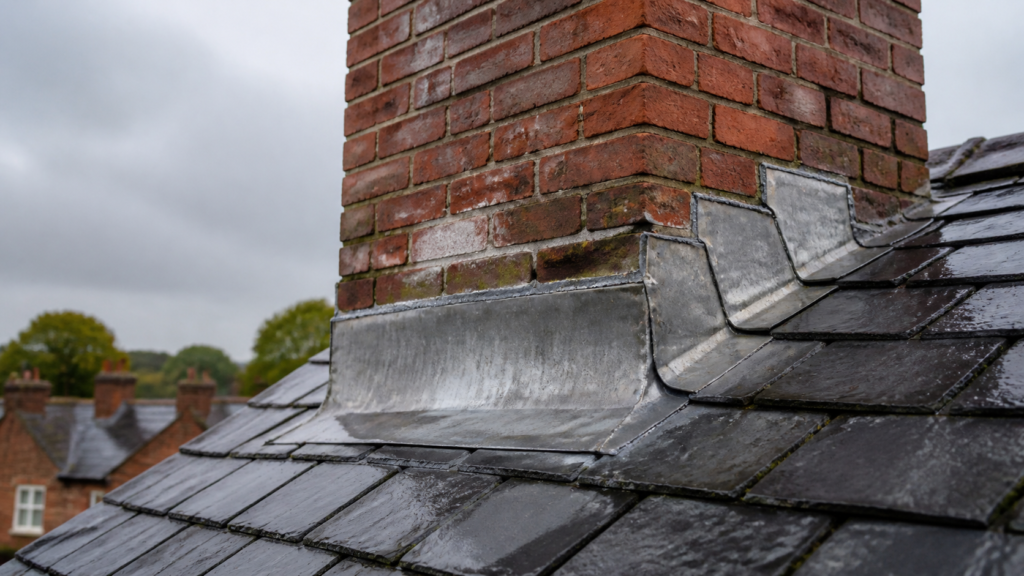
- Inspecting what is underneath. Once the growth is off, cracked tiles, failed pointing and displaced flashings become visible. This is the genuinely valuable part of a clean, and it should be reported to you.
- Low-pressure rinsing only, if any water is used at all, and never directed up the slope.
Our roof cleaning and moss removal service works this way, and the approved roofing specialists carrying it out are fully insured and appropriately qualified. Access equipment is part of the job, because roof cleaning is working at height whatever else it is.
What actually keeps it off
No treatment is permanent in a climate like Kent’s. What changes the rate of regrowth is the environment around the roof.
- Cut back overhanging branches where you can. More light and more airflow on the slope makes the biggest single difference.
- Keep gutters clear. Standing water in a gutter keeps the lowest course of tiles permanently damp and gives moss a permanent foothold at the eaves.
- Zinc or copper strips at the ridge. Rain washing over the metal carries trace ions down the slope and inhibits growth. The effect is real but modest and diminishes down the slope, so treat it as a slowing measure rather than a cure.
- Deal with the roof, not the moss, where the tiles themselves have broken down. Cleaning a spent concrete tile roof is maintenance spend that buys very little.
Building the roof into an annual check is more effective than any one-off treatment. Our roof maintenance service exists to catch the blocked valley and the slipped tile while they are still small problems.
The safety point, plainly
Do not go up to clear moss yourself. Roof cleaning combines the three things that cause falls: height, a wet surface, and the need to reach. Moss makes a slope slippery in a way that dry tiles are not, and a homeowner’s ladder against a moss-laden gutter is a poor bet. This is work for people with the right access equipment and the right insurance.
What to do next
If your roof has gone green and you are not sure whether it matters, the answer is usually that it does not, but the only way to know is to have someone look at the covering underneath. A survey will tell you whether you are looking at a cosmetic issue, a drainage issue, or a covering that has reached the end.
We arrange a free roof survey across Kent and Medway, including a check of gutters and valleys, and you get a written account of what was found. If a clean is worthwhile you will be told so, and if it is not you will be told that too. Book through our roof inspections and surveys page or get in touch to arrange a free roof survey. We cover the coastal towns, the Medway towns and the Weald, with details on the Whitstable roofing page and the rest of our coverage area.
Common questions about moss on roofs
Does moss actually damage roof tiles?
Thick moss can hold water against a porous tile, which matters most in a cold snap when trapped water expands. The more common problem is what happens when it dislodges, because it blocks gutters, valleys and outlets and sends water where the roof was never designed to take it. A thin covering on an otherwise sound roof is generally cosmetic.
Is moss a sign that my roof is failing?
Not on its own. A green north-facing slope and a clear south-facing one is normal in Kent, and says more about shade than about condition. Heavy growth on every elevation, including the sunny side, is more telling, because it usually means a concrete tile has lost its surface coating and become absorbent throughout. That is a covering question rather than a cleaning one.
How often should a roof be cleaned?
There is no fixed interval, and cleaning a roof that does not need it buys appearance rather than performance. What does benefit from an annual look is the drainage: gutters, valleys, hoppers and outlets, where moss and leaf debris cause the problems that actually lead to leaks. Roofs under mature tree cover in the Weald and along the Downs need that more often than exposed ones.
Do moss killer treatments work?
A roof-safe biocide applied after the growth has been cleared will kill residual spores and slow regrowth, but it works gradually rather than instantly, and a roof that continues to clear for weeks afterwards is behaving normally. It is not a substitute for clearing the gutters and valleys, and it does not change the shade, damp and porous surface that caused the growth.
Should I remove moss from my roof myself?
No. It is work at height on a surface that moss makes genuinely slippery, and it needs proper access equipment rather than a ladder against a debris-laden gutter. Pressure washing in particular does real damage, stripping the surface off concrete tiles and driving water under the laps. What you can usefully do from the ground is watch for gutters overflowing in heavy rain.