Homeowners usually ask this question the wrong way round. The useful question is not “how old is my roof”, it is “what has actually failed”. A roof should be repaired when the covering and the fixings are sound and the damage is localised. It should be replaced when the fixings, the battens or the underlay have failed across the slope, because at that point every repair is being carried out on a structure that is still deteriorating underneath it.
Age is a clue, not a verdict. There are Kent peg tile roofs on Wealden farmhouses that have outlived four generations of owners, and there are concrete tile roofs from the 1970s that are already at the end because the felt beneath them has perished. What follows is how to tell the difference, and what tips the decision one way or the other.
Start with what failed, not with the age
A pitched roof is a system, not a surface: the covering you can see, the fixings that hold it, the battens they go into, the underlay beneath, and the timber structure carrying all of it. Water gets in when any one of those fails, but only the first is visible from the ground. That gives you a simple diagnostic ladder:
- Covering damaged, everything else sound. A cracked tile, a slipped slate after a gale, a broken ridge. This is a repair, and it should be a straightforward one.
- Fixings failing, covering sound. Slates slipping steadily with no storm to blame, several a year, in no particular pattern. This is usually nail sickness and it is not a repair problem, it is a re-fixing problem.
- Underlay or battens failing. Daylight through the loft, sagging or torn felt, damp battens, timber that gives under a screwdriver. Once this is general rather than local, re-covering is the honest answer.
- Structure moving. A visible dip in the ridge line, spreading rafters, a bowed slope. This is a structural question, not a covering one, and it needs assessing before any decision about the roof surface is made.
Only the first of those is genuinely a repair job. The others can all be patched, but patching them does not stop the process that caused the failure.
Signs a roof is near the end rather than just tired
Individually, none of these settles it. Two or three together usually do.
You are repairing it repeatedly
If slates or tiles have come off in three of the last five winters, in different places each time, the roof is telling you something. Random and recurring failure is a fixings or underlay problem, and on a slate roof it is usually nail sickness, where the fixings corrode while the slates stay sound. Repeated failure in one specific spot is more likely a detailing problem, such as a badly formed valley or flashing. Losses that only ever follow a named storm are a different case again, and our guide to what to do first after storm damage to a Kent roof covers how that is assessed and claimed.
The underlay has perished
Older bitumen felt goes brittle and tears, particularly where it drapes between rafters and where sunlight has reached it at the eaves. In a loft you can often see it hanging in strips. Once the underlay has gone, the covering is the only barrier, and coverings are designed to shed water, not to be watertight on their own.
The tiles themselves are breaking down
Concrete tiles lose their surface coating and become porous, absorbing water and going soft at the edges. Clay pantiles and peg tiles can delaminate or spall after repeated freeze and thaw. Natural slate is more durable than either, which is why on slate roofs it is nearly always the nails that fail first, not the slate.
Widespread mortar failure, and loose fixings
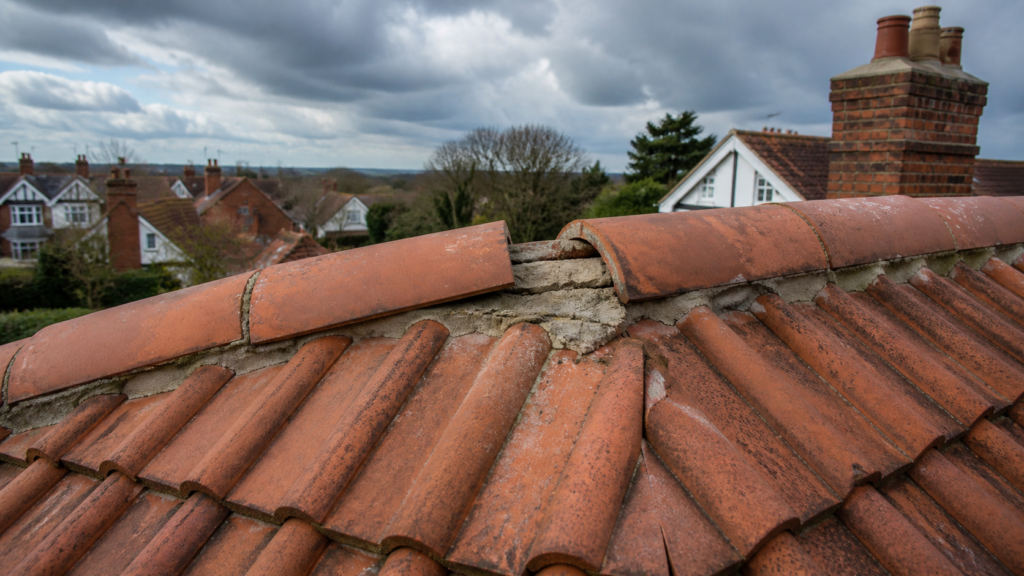
Ridge, hip and verge mortar cracking along the whole length rather than in one section is worth taking seriously. Re-bedding is a legitimate repair, but mortar failing everywhere at once suggests a roof worth assessing as a whole. Rusted nail shanks in the gutter say the same thing more directly.
What Kent’s housing stock adds to the picture
Victorian and Edwardian terraces in Canterbury, Maidstone, Chatham, Gravesend, Ashford and Tunbridge Wells are typically Welsh slate on softwood battens, with no underlay at all or a felt added later. The slate is often perfectly serviceable at 120 years old while the nails have long since gone. Stripping and re-fixing, reusing sound slates, is frequently the sensible route.
Kent peg tile roofs on older rural and village properties are a specialist case. The tiles are hung on pegs, the pitch is steep, and matching salvaged tiles matters for both appearance and planning. Wholesale replacement is rarely appropriate and is sometimes not permitted.
Concrete tile roofs from the 1960s to 1980s across the Medway towns, Ashford, Dartford and the newer parts of most Kent towns are where you most often find a roof that genuinely has reached the end. The tile and the bitumen felt beneath it went on together, and they tend to reach their limits together too.
Coastal properties in Thanet, Whitstable, Herne Bay, Folkestone and Deal lose their fixings sooner than inland equivalents because of salt-laden air, which shifts a lot of otherwise sound roofs into the re-fixing category earlier than their age suggests.
Why patch repairs stop making sense
There is a point at which each repair is buying less time than the one before. It arrives when the roofer has to disturb sound-looking material around the repair to get at the fault, and that disturbed material then fails in turn. On a nail-sick slate roof this is almost a rule: lifting slates to replace one breaks the fixings on its neighbours, so the patch creates its own next failure.
The same applies to underlay. You cannot renew felt under a small area without stripping the covering above it, and once you are stripping, the question of whether to do the slope properly has effectively already been asked. Access compounds it: scaffolding costs the same whether you are replacing six tiles or the whole slope, which is why several small jobs over several years tend to be poor value against one planned piece of work. Our page on roof repairs covers where repair remains the right call, and new roof installation and re-roofing covers the alternative.
The building regulations point that changes the calculation
This catches people out. In England, stripping and re-covering more than 25% of a roof is treated as a material alteration under the Building Regulations. That normally brings two consequences: the work must be notified to building control, and the roof’s thermal performance must be improved where it is reasonably practicable to do so. Approved Document L sets limiting U-values for a renovated roof, generally around 0.16 W/m²K for a pitched roof insulated at ceiling level and 0.18 W/m²K at rafter level. Which approvals apply to your address, and who has to notify them, is set out in our guide to roof work and building regulations in Kent.
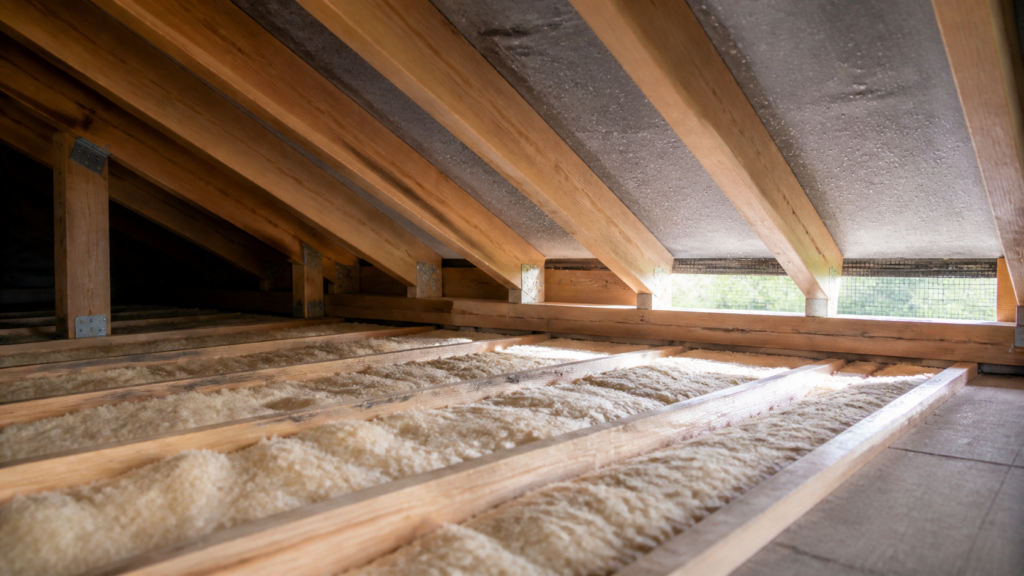
It matters for the repair-or-replace decision because a large partial re-covering and a full re-covering are not as far apart in scope as they first appear. If you are already over the threshold, you are already in notifiable, upgradeable territory. Our page on roof insulation and ventilation explains why ventilation has to be considered alongside any insulation upgrade, because adding insulation without airflow moves the condensation risk rather than removing it.
What affects the cost of each route
Without putting figures on anything, these are the variables that move the number on either a repair or a re-roof:
- Access. Terraced properties, restricted rear access, roadside scaffolding needing a licence from the highway authority, and three-storey Victorian townhouses all add to it.
- Material. Reusing sound natural slate is very different from sourcing new slate; matching salvaged Kent peg tiles is different again from a stock concrete tile.
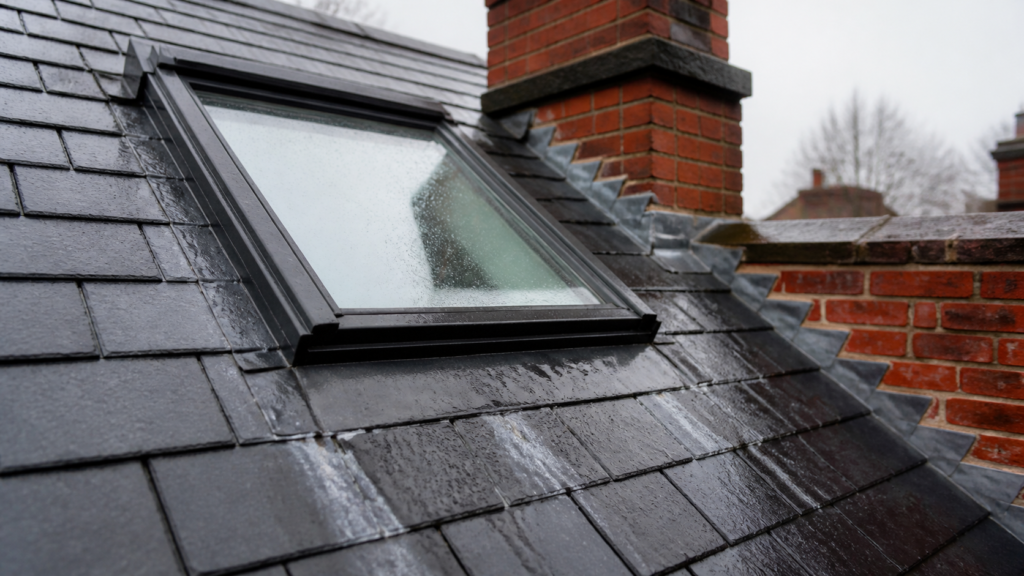
- Pitch and complexity. Valleys, hips, dormers, multiple chimneys and roof windows each add labour and detailing.
- What is found once it is open. Battens and rafter feet are the usual surprises, particularly at the eaves where water has been running for years.
- Regulatory scope. Insulation upgrades, building control notification, and conservation area or listed building requirements.
A survey that identifies these before work starts is what stops a quotation moving after the scaffold goes up.
Where this leaves you
If the damage is localised and the rest of the slope is sound, repair it and get on with your life. If slates are moving on their own, if the underlay has perished, or if you have paid for the same problem more than twice, get the roof assessed as a whole before spending anything else on it.
We arrange a free roof survey across Kent and Medway, including the loft where access allows, and you get a written assessment that tells you which of those two situations you are actually in. The work is carried out by approved roofing specialists who are fully insured and appropriately qualified for pitched roofing and slate and tile roofing alike.
Arrange a free roof survey and get a straight answer before you commit to either route.
Common questions about repair and replacement
How long should a roof last in Kent?
There is no single figure, because the covering and the fixings age at different rates. Natural slate frequently outlives the nails holding it, while concrete tiles and the felt beneath them tend to reach their limits together. Exposure matters too, since salt-laden air on the coast shortens the life of ferrous fixings. The useful measure is condition rather than age, which is what a survey establishes.
Can I replace just one slope of my roof?
Yes, and it is often sensible where one elevation has failed and the other has not. Be aware that in England, stripping and re-covering more than 25% of a roof is normally treated as a material alteration under the Building Regulations, and a single slope usually exceeds that. It generally means notifying building control and improving the roof’s thermal performance where it is reasonably practicable.
Will my insurance pay for a new roof?
Usually not. Buildings insurance is designed to cover sudden, accidental damage rather than deterioration, and insurers routinely decline claims where the underlying cause is wear and tear or a roof that had reached the end of its serviceable life. Damage from a qualifying storm may well be covered, but the policy wording and the recorded weather conditions decide that, not the age of the roof.
How long does a re-roof take?
It depends on the size and pitch of the roof, how many valleys, chimneys and roof windows are involved, how straightforward the scaffolding is, and what is found once the covering comes off. Weather is the other variable, because a stripped roof cannot be left open. A survey before work starts is what allows a realistic programme to be given rather than an optimistic one.
Do I need to move out while my roof is replaced?
In most cases no. The work is carried out from scaffolding outside, so the house stays usable, though it is noisy and there is usually dust in the loft while the roof is open. If ceilings are being disturbed, or the loft is a habitable room, that changes things, and your approved roofing specialist will tell you before the work starts.